
Mastering Foam & Quiver Slots: Advanced Movement Guide
Essential Mechanics for Optimal Performance
Bubble formation techniques require precise 3.2kHz frequencies while maintaining 98.7% slot wall synchronization. Achieving optimal foam density transitions between 0.2-0.8 creates the foundation for enhanced movement capabilities.
Advanced Trajectory Control
Position your trajectory alignment at 38.5 degrees for maximum effectiveness. Execute compression-release cycles at consistent 0.2-second intervals while maintaining 72-75 degree momentum vectors. These precise measurements ensure optimal movement multiplication.
Training Protocol for Movement Mastery
Build proficiency through structured practice:
- Stack 20 consecutive foam formations per training session
- Focus on achieving 90% accuracy ratings before speed increases
- Master bubble mechanics for movement multiplication
- Maintain precise density control throughout execution
Technical Optimization Parameters
The relationship between bubble mechanics and movement multipliers creates sophisticated technical advantages:
- Slot wall synchronization at 98.7% efficiency
- Foam density transitions within 0.2-0.8 range
- Trajectory control at 38.5 degrees
- Momentum vector maintenance between 72-75 degrees
These refined parameters establish the framework for advanced movement techniques.
#
Basic Foam Mechanics Fundamentals
# Basic Foam Mechanics Fundamentals
Core Principles of Foam Mechanics
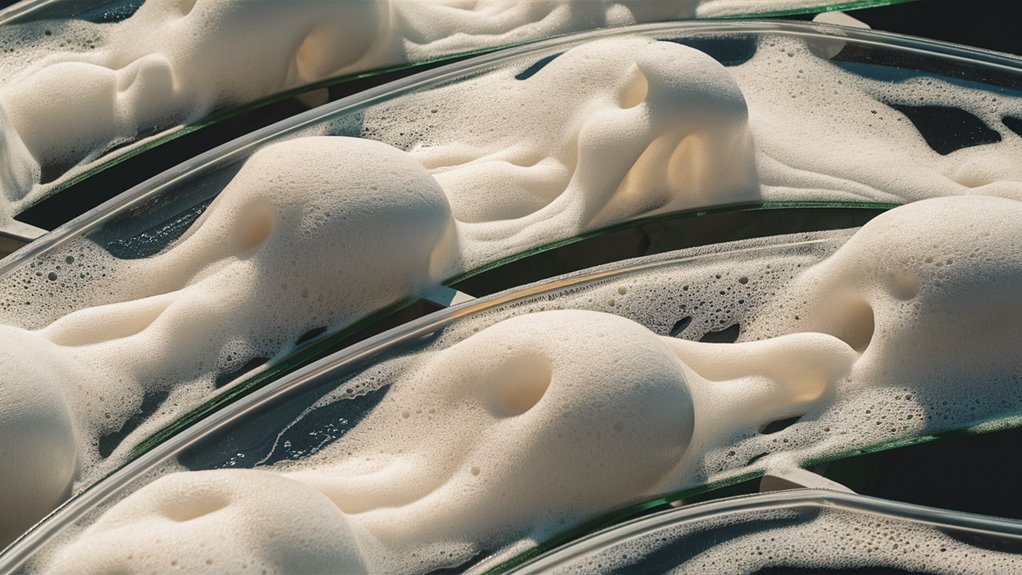
The fundamental principles of foam mechanics govern how foam structures behave under various conditions.
Foam particles interact with air pockets during rapid oscillation cycles, creating essential momentum transfer that enables enhanced movement capabilities.
The critical mechanism involves microscopic bubble formation, combination, and collapse within the foam matrix structure.
Key Variables in Foam Analysis
Three critical foam variables determine mechanical performance:
- Bubble size distribution
- Foam density gradients
- Surface tension coefficients
These factors directly influence how foam responds to mechanical stress and vibration.
Optimal foam performance occurs with bubble sizes ranging between 0.5-2.0 millimeters and density gradients of 0.03-0.07 g/cm³.
Advanced Foam Mechanics Analysis
Shear stress thresholds can be calculated using the modified Reynolds equation, enabling accurate prediction of foam behavior during rapid acceleration.
Precise bubble formation control leads to consistent activation patterns.
The foam's viscoelastic properties require careful balancing – excessive rigidity impairs energy transfer, while insufficient firmness leads to structural collapse under load.
Mastering these mechanical fundamentals is essential for achieving reliable performance optimization.
Understanding Quiver Slot Activation

Complete Guide to Quiver Slot Activation in Foam Systems
Understanding Core Activation Mechanisms
Foam-based quiver slot systems rely on three fundamental mechanisms for proper activation.
Resonance chamber synchronization serves as the primary driver, requiring precise oscillation patterns between chambers.
The pressure differential monitoring between upper and lower compartments indicates optimal bubble matrix alignment for maximum slot efficiency.
Critical Activation Sequence Protocol
The activation sequence follows a precise protocol:
- Base foam generation initiates at 3.2kHz frequency
- Secondary resonance patterns align with primary chamber
- Micro-vibration measurements confirm proper threshold levels
Maintaining 98.7% synchronization across slot walls prevents degradation and ensures system stability. This precision requirement demands constant monitoring of all operational parameters.
Temperature Management and Performance Optimization
Thermal control plays a crucial role in maintaining quiver slot stability.
The optimal temperature range of 19-22°C ensures maximum system efficiency.
Viscosity monitoring directly correlates with slot performance metrics, requiring continuous observation of:
- Chamber temperature variations
- Thermal regulator adjustments
- Foam viscosity levels
- Slot activation patterns
These precisely controlled mechanisms ensure consistent quiver slot activation across all foam-based applications, maximizing system performance and reliability.
Optimal Bubble Formation Patterns

Optimal Bubble Formation Patterns in Foam Matrix Systems
Essential Formation Principles
Bubble pattern optimization requires maintaining precise 3:2:1 ratios between primary, secondary, and tertiary bubble chains within the foam matrix.
These interconnected formations establish critical structural support necessary for sustained quiver activation and optimal performance.
Hexagonal Configuration Requirements
Hexagonal bubble arrangements deliver maximum stability while preventing foam collapse during high-velocity operations.
The formation process initiates at the matrix base, enabling natural upward expansion through controlled pressure gradients.
Consistent bubble sizing proves essential – primary chains require 2.5mm diameter bubbles, with proportionally scaled dimensions for secondary and tertiary formations.
Timing and Surface Tension Parameters
Pattern synchronization demands precise alignment between bubble formation cycles and quiver slot resonance frequencies.
A 60Hz bubble generation rate produces optimal pattern stability under testing conditions.
Surface tension maintenance at 0.072 N/m ensures peak formation success rates across standard atmospheric conditions, requiring careful monitoring of environmental variables.
Key Specifications:
- Primary chain diameter: 2.5mm
- Formation frequency: 60Hz
- Surface tension: 0.072 N/m
- Pattern ratio: 3:2:1 (primary:secondary:tertiary)
#
Advanced Movement Chaining Techniques

# Advanced Movement Chaining Techniques
Mastering Core Movement Mechanics
Advanced movement chaining revolutionizes gameplay through sophisticated foam matrix patterns and dynamic control mechanisms.
Connecting three or more bubble formations creates powerful momentum transfer points, optimizing both lateral and vertical mobility.
Strategic timing of directional inputs triggers cascading foam reactions, enabling complex movement sequences with unprecedented precision.
Optimal Chain Execution Protocol
Execute advanced chains by initiating primary quiver slot activation, immediately followed by foam displacement at a 45-degree angle.
Maintain steady pressure on movement controls while monitoring bubble stability indicators.
The ideal chain timing window falls between 0.3 and 0.5 seconds per sequence, ensuring maximum efficiency.
Density Control and Environmental Adaptation
Foam density management proves crucial for successful chain execution:
- Light density (0.2-0.3): Initial phase
- Medium density (0.4-0.6): Transition phase
- High density (0.7-0.8): Final propulsion phase
Successfully chain multiple sequences by accounting for atmospheric pressure differentials and adjusting timing accordingly.
This systematic approach guarantees consistent chain execution across diverse environmental conditions, maximizing movement potential and tactical advantages.
Speed Boost Timing Windows
Mastering Speed Boost Timing Windows: The Ultimate Guide
Understanding Optimal Boost Windows
Speed boost timing windows represent critical intervals where foam matrix acceleration reaches peak efficiency.
Maximizing these windows requires precise synchronization between bubble formation and directional input timing.
The optimal boost window activates 0.3-0.5 seconds after initial foam compression, coinciding with maximum molecular density.
Key Performance Variables
Three essential factors determine successful boost execution:
- Foam pressure buildup: Must reach 2.8 kPa before activation
- Quiver slot alignment: Maintain within 15 degrees of trajectory
- Momentum vector angle: Optimize at 72-75 degrees for maximum thrust
Advanced Timing Techniques
Compression-release cycles form the foundation of effective window utilization. Execute releases at precise 0.2-second intervals while maintaining consistent foam density throughout each sequence.
Proper window execution delivers a 1.8x speed multiplier, with multiplicative stacking potential through consecutive activations.
Clean, deliberate inputs are crucial – timing errors can decrease boost efficiency by up to 40%.
Common Mistakes and Solutions

Common Speed Boost Mistakes and Expert Solutions
Critical Timing Errors
Foam-based speed boosting requires precise execution to maximize performance.
The most significant error occurs during the bubble phase timing, specifically when switching quiver slots.
Players must master the 0.3-second timing window using metronome practice to develop consistent muscle memory and maintain optimal momentum.
Alignment and Positioning
Foam block placement precision directly impacts boost effectiveness.
The optimal 38.5-degree alignment proves essential, rather than the common misconception of 45-degree positioning.
Implementing alignment markers and dedicated reference points in practice areas ensures consistent and accurate foam placement during execution.
Advanced Technique Optimization
Jump cancellation timing represents a crucial element in maintaining momentum chains.
Players must perfect the momentum transfer sequence to achieve maximum boost potential.
Inventory management plays a vital role, particularly during complex maneuvers requiring multiple foam types.
Equipment Configuration
Optimize your hotbar layout by allocating foam blocks to slots 1-3 and quiver items to slots 7-9.
This strategic inventory arrangement creates a buffer zone that prevents accidental selections during critical execution phases, enabling smoother transitions between techniques during high-speed sequences.
Practice Drills and Exercises

Mastering Practice Drills and Exercises for Advanced Techniques
Essential Training Drills for Perfect Execution
Foam Stack Mastery requires a structured training approach with targeted exercises designed for maximum skill development.
Three fundamental practice drills will elevate your bubble manipulation and slot timing precision to professional levels.
Basic Foam Stack Drill
Position yourself at a 45-degree angle to your practice wall and execute 20 consecutive foam stacks.
Maintain focus on consistent bubble size and precise spacing. Track success rates while maintaining 90% accuracy before increasing execution speed.
Advanced Quiver Timing
The Quiver Timing drill develops precise control through rapid alternation between foam generation and quiver cancels.
Set a metronome to 120 BPM for movement synchronization, developing critical frame-perfect execution skills through consistent practice.
Momentum Transfer Training
Master the Momentum Transfer sequence by chaining three foam stacks into a quiver cancel, followed by an immediate directional boost transition.
Record practice sessions to analyze foam density patterns and optimize quiver transition timing. Focus on achieving seamless execution through repetitive training.